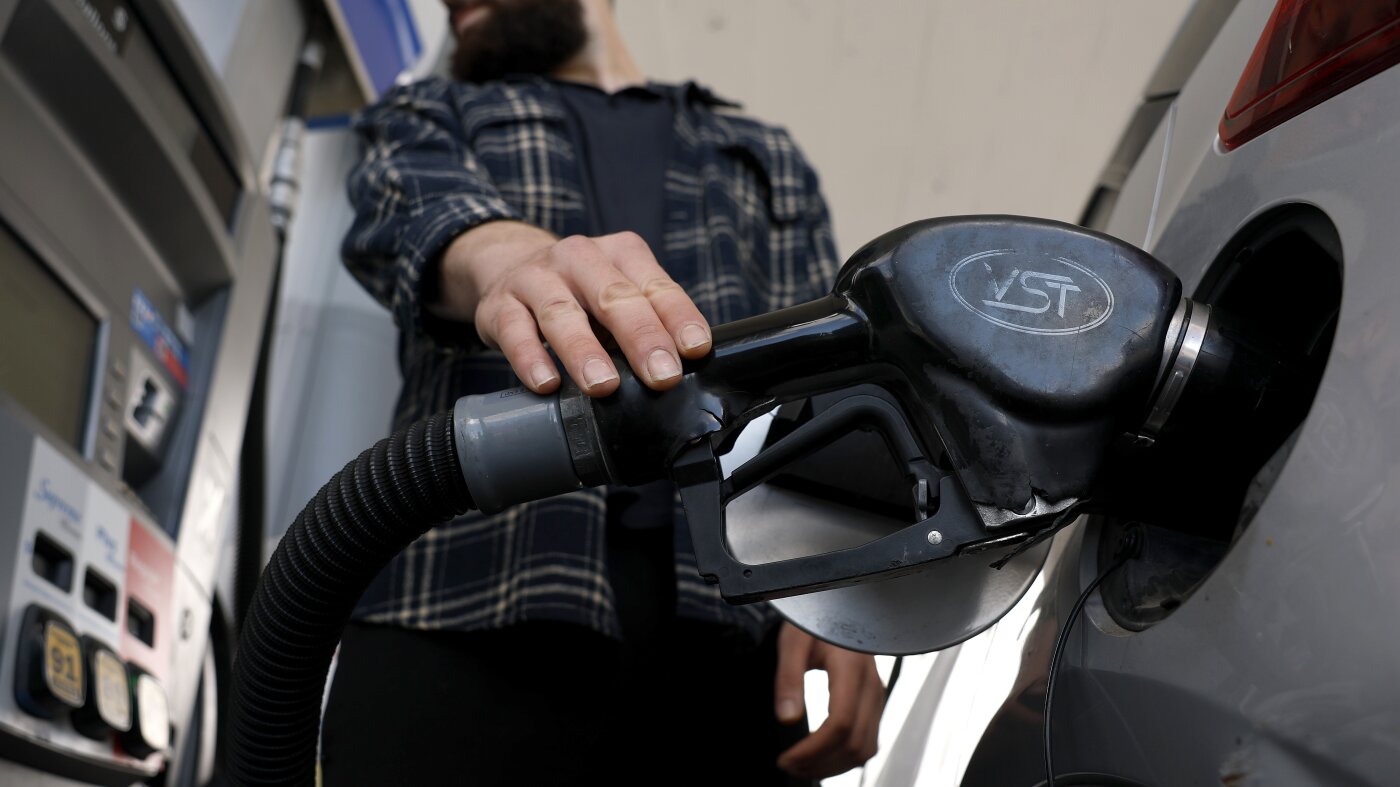
qualitative insights The platform aggregates financial data and market news to provide clear insights into stock performance and earnings outcomes. With the U.S. national average for a gallon of gasoline at $4.55 heading into a major holiday travel weekend, consumers are exploring various methods to reduce fuel costs. Options range from driving slower and maintaining vehicle efficiency to adopting electric vehicles or reducing overall driving. The persistent high price may affect travel behavior and personal spending patterns.
Live News
qualitative insights Investors who track global indices alongside local markets often identify trends earlier than those who focus on one region. Observing cross-market movements can provide insight into potential ripple effects in equities, commodities, and currency pairs. Diversifying information sources enhances decision-making accuracy. Professional investors integrate quantitative metrics, macroeconomic reports, sector analyses, and sentiment indicators to develop a comprehensive understanding of market conditions. This multi-source approach reduces reliance on a single perspective. According to recent data, the national average price for a gallon of regular gasoline stands at $4.55 as Americans prepare for one of the busiest travel weekends of the year. This price level reflects ongoing pressure from global crude oil markets and domestic refining constraints. Drivers face a choice among three broad strategies to lower their fuel bills: modifying driving habits, switching to more efficient vehicles, or reducing travel altogether. Driving at slower speeds—particularly below 60 mph on highways—may improve fuel economy by up to 7-14%. Reducing aggressive acceleration and maintaining consistent speeds also contribute to better mileage. Another widely recommended approach is to keep tires properly inflated and engines tuned, as even minor maintenance gaps can lower efficiency by several percent. For those considering a vehicle upgrade, electric or hybrid models, though carrying higher upfront costs, could yield substantial savings per mile compared to current gas prices. Some consumers are also choosing to combine errands or use public transit to minimize trips. The $4.55 average is the highest level for this point in the year in recent memory, though regional variations exist. Areas in the West Coast often see prices above $5.50, while Gulf Coast states may be closer to $3.80. The timing coincides with peak summer driving season, amplifying the financial impact on households.
High Gas Prices Near $4.55 Prompt Consumer Strategies for Fuel Savings Some investors focus on momentum-based strategies. Real-time updates allow them to detect accelerating trends before others.Incorporating sentiment analysis complements traditional technical indicators. Social media trends, news sentiment, and forum discussions provide additional layers of insight into market psychology. When combined with real-time pricing data, these indicators can highlight emerging trends before they manifest in broader markets.High Gas Prices Near $4.55 Prompt Consumer Strategies for Fuel Savings Real-time updates allow for rapid adjustments in trading strategies. Investors can reallocate capital, hedge positions, or take profits quickly when unexpected market movements occur.Historical patterns can be a powerful guide, but they are not infallible. Market conditions change over time due to policy shifts, technological advancements, and evolving investor behavior. Combining past data with real-time insights enables traders to adapt strategies without relying solely on outdated assumptions.
Key Highlights
qualitative insights Monitoring investor behavior, sentiment indicators, and institutional positioning provides a more comprehensive understanding of market dynamics. Professionals use these insights to anticipate moves, adjust strategies, and optimize risk-adjusted returns effectively. Combining qualitative news with quantitative metrics often improves overall decision quality. Market sentiment, regulatory changes, and global events all influence outcomes. High gasoline prices may weigh on consumer discretionary spending, particularly for lower-income households that spend a larger share of income on fuel. Travel patterns could shift, with more people staying closer to home or opting for shorter road trips. The airline and hospitality sectors might see reduced demand for long-distance car travel, but could benefit from substitution toward flights or staycations. For the automotive industry, sustained elevated prices may accelerate interest in fuel-efficient and electric vehicles. Already, automakers have reported rising inquiries for hybrids and EVs, though supply constraints and higher sticker prices remain barriers. Gas station operators and convenience stores might experience lower fuel volumes but potentially higher margins per gallon. On a macroeconomic level, persistent energy costs could contribute to inflation stickiness, possibly influencing central bank policy decisions. However, these effects depend on how long prices remain elevated—a factor driven by global supply dynamics and OPEC+ decisions.
High Gas Prices Near $4.55 Prompt Consumer Strategies for Fuel Savings Real-time monitoring of multiple asset classes can help traders manage risk more effectively. By understanding how commodities, currencies, and equities interact, investors can create hedging strategies or adjust their positions quickly.Visualization of complex relationships aids comprehension. Graphs and charts highlight insights not apparent in raw numbers.High Gas Prices Near $4.55 Prompt Consumer Strategies for Fuel Savings Effective risk management is a cornerstone of sustainable investing. Professionals emphasize the importance of clearly defined stop-loss levels, portfolio diversification, and scenario planning. By integrating quantitative analysis with qualitative judgment, investors can limit downside exposure while positioning themselves for potential upside.Cross-market analysis can reveal opportunities that might otherwise be overlooked. Observing relationships between assets can provide valuable signals.
Expert Insights
qualitative insights Volume analysis adds a critical dimension to technical evaluations. Increased volume during price movements typically validates trends, whereas low volume may indicate temporary anomalies. Expert traders incorporate volume data into predictive models to enhance decision reliability. Some investors rely on sentiment alongside traditional indicators. Early detection of behavioral trends can signal emerging opportunities. From an investment perspective, the current environment suggests that energy-sector companies may continue to benefit from robust cash flows if crude prices stay above $80 per barrel. Conversely, consumer-facing industries like retail and travel could face headwinds as households adjust budgets. The shift toward efficiency and electrification presents potential opportunities in battery materials, charging infrastructure, and utilities supporting grid upgrades. Yet, caution is warranted. Gas prices are notoriously volatile, and a rapid decline in crude costs could reverse the narrative. No single strategy guarantees savings for all drivers, as driving patterns and vehicle types vary widely. Consumers should evaluate their own usage and total cost of ownership before making major purchases like EVs. Market expectations for future fuel prices remain uncertain, with analysts pointing to geopolitical risks and seasonal demand fluctuations as key variables. Disclaimer: This analysis is for informational purposes only and does not constitute investment advice.
High Gas Prices Near $4.55 Prompt Consumer Strategies for Fuel Savings Correlating futures data with spot market activity provides early signals for potential price movements. Futures markets often incorporate forward-looking expectations, offering actionable insights for equities, commodities, and indices. Experts monitor these signals closely to identify profitable entry points.Monitoring global indices can help identify shifts in overall sentiment. These changes often influence individual stocks.High Gas Prices Near $4.55 Prompt Consumer Strategies for Fuel Savings Trading strategies should be dynamic, adapting to evolving market conditions. What works in one market environment may fail in another, so continuous monitoring and adjustment are necessary for sustained success.Access to futures, forex, and commodity data broadens perspective. Traders gain insight into potential influences on equities.